

The pros and cons of AI writing tools are worth understanding before you rely on them: they can turn a blank page into a solid draft in minutes, but they also bring accuracy, originality, legal, and SEO risks that many creators overlook. This guide covers what Google and copyright law say, plus a step-by-step workflow for using AI without losing quality or trust.
Biggest benefit
Speed. AI handles outlines, first drafts, headlines, and repetitive writing so you can spend more time on strategy and quality.
Biggest risk
Publishing unchecked output. AI can invent facts, repeat common phrasing, and produce content with no real experience behind it.
The debate is no longer whether people use AI to write. It is how to use it well. Business leaders weighing the benefits and drawbacks for business content tend to agree on one point: AI works best as an assistant, not a replacement. If you are new to the technology, start with our guide on how AI tools work, then come back here to decide how they fit into your content process.
What Are AI Writing Tools?
AI writing tools use large language models to generate, rewrite, or improve text based on the prompts you give them. They learn patterns from huge amounts of text, then predict which words should come next, which is why the output often sounds natural. As this overview of AI content writing explains, the tools can produce anything from social posts to long articles, but they do not truly understand the topic the way a human expert does.
There are several kinds, including general chatbots, marketing copy generators, grammar and style editors, and paraphrasing tools. For a full breakdown with examples, see our guide to the types of AI tools explained.
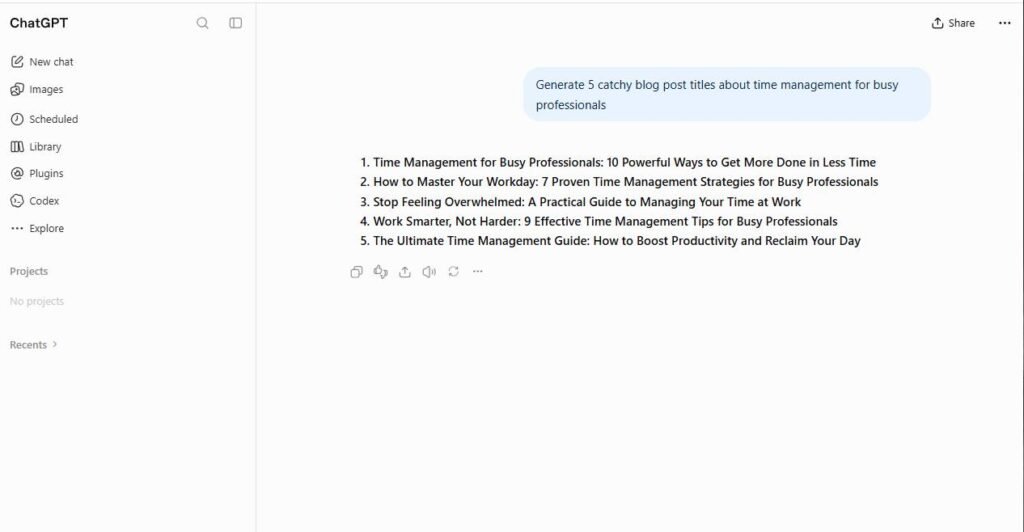
Pros of AI Writing Tools for Content Creation
Used well, AI removes the slowest parts of writing. ICS Learn’s breakdown of benefits and drawbacks highlights efficiency, lower cost, SEO support, and help with writer’s block as the main advantages. Here is how those benefits show up in everyday content work.
| Benefit | What it means for creators |
|---|---|
| Faster drafting | Outlines and first drafts take minutes, leaving more time for editing and original ideas. |
| Beating writer’s block | AI suggests angles, headlines, and structures when you are stuck. |
| Lower cost | Small teams and solo creators can produce more content without hiring for every task. |
| Research support | Quick summaries help you understand a topic before you dig into real sources. |
| Clean, readable text | Grammar, tone, and clarity suggestions polish rough writing. |
| Multilingual output | Drafts and translations help you reach audiences in more than one language. |
To get these gains consistently, pair the tools with good habits. Our tips on how to get the most out of AI tools and our guide to AI tools for productivity show how to save time without sacrificing quality.
Cons and Hidden Risks of AI Writing Tools
The downsides are easy to miss because AI text looks polished. MasterWriter’s look at where AI falls short points to flat tone, repetitive phrasing, and weaker emotional depth. The two columns below put the strengths and weaknesses side by side.
Where AI helps
- Structure: Outlines, summaries, and rewrites for different audiences.
- Volume: Product descriptions, meta descriptions, and routine copy.
- Editing: Grammar fixes and clearer phrasing.
Where AI falls short
- Accuracy: It can state false information with full confidence.
- Originality: Common phrases and predictable structures make content sound generic.
- Experience: It has no firsthand stories, opinions, or credentials.
- Skills: Heavy reliance can weaken your own writing and thinking.
Hidden risk: Over time, leaning on AI for every draft can flatten your brand voice. If your posts start sounding like everyone else’s, readers have less reason to come back to yours.

Risks for Business and Marketing Teams
For businesses, the stakes are higher because content represents the brand. Experts quoted in this industry-by-industry look at AI writing note that sales, marketing, and support teams all gain speed but risk losing the personal touch and a distinctive voice.
| Risk | Why it matters | Safeguard |
|---|---|---|
| Generic brand voice | Content blends in with competitors and weakens recognition. | Keep a style guide and edit every draft to match it. |
| Factual errors | Wrong claims hurt credibility and can create legal exposure. | Fact-check every statistic, quote, and product claim. |
| Confidential data leaks | Pasting private information into a tool may expose it. | Never enter client data, contracts, or unreleased plans. |
| Impersonal communication | Sales and support messages can feel cold and automated. | Use AI for drafts, then personalize before sending. |
| Over-automation | Teams may stop thinking critically about messaging. | Keep a human owner responsible for every published piece. |
Before rolling AI out across a team, it helps to choose the right AI tools for each task instead of adopting one tool for everything.
Risks for Students and Academic Writing

In education, the main concern is academic integrity. Clemson University’s Writing Lab guidance explains that policies vary widely by instructor, journal, and institution, and that submitting AI-generated material without attribution can count as plagiarism. The safest approach is to check your school’s rules before using AI at all.
There are learning risks too. A review of AI in classrooms on the American College of Education blog points to evidence that students who lean heavily on chatbots may accept answers without questioning them, which weakens critical thinking. AI detectors add another problem. Stanford researchers found that detectors are biased against non-native English writers, so a detector score should never be treated as proof.
Student tip: Use AI for brainstorming, outlines, and feedback on clarity. Do the actual thinking and writing yourself, cite AI use where required, and follow the APA guidance on citing ChatGPT if your course uses APA style.
Does Google Penalize AI Content?
Google does not automatically penalize content because AI helped write it. Its stated focus is quality: content that is helpful, original, and created for people rather than for search engines. Google’s own documentation on using generative AI content says that using automation mainly to manipulate rankings, such as mass-producing pages with little value, goes against its spam policies.
Google’s helpful content update announcement describes the goal of rewarding content written for people that shows real expertise and satisfies the reader. In practice, that means thin, repetitive AI pages are a risk, while well-edited articles with firsthand experience, accurate details, and clear sources can still perform well.
SEO takeaway: Do not publish raw AI output. Add original examples, screenshots, personal experience, and verified facts so each page offers something a generic draft cannot.
Can You Legally Publish AI-Written Content?

In most cases you can publish content you created with AI help, but ownership and platform rules are more complicated. The U.S. Copyright Office’s artificial intelligence and copyright resources explain that protection depends on human authorship, so material generated entirely by AI may not be protected, while your own creative edits, selection, and arrangement can be. Laws differ by country, so check the rules where you publish.
There are practical risks as well. AI can echo existing phrasing, which is why plagiarism and uncredited sources remain a concern. Many publishers, journals, and self-publishing platforms also require you to disclose AI use, so read each platform’s current policy before you publish a book, article, or client project. This is general information, not legal advice. For high-stakes work, talk to a qualified lawyer.
AI Hallucinations and Accuracy: How to Fact-Check
AI hallucination means the tool produces information that sounds right but is false. The American Psychological Association’s guidance on AI in research and writing shares a telling example: when its style experts asked a chatbot for peer-reviewed sources, the references looked convincing, but none of them turned out to exist. Use this checklist before publishing anything AI helped create.
- Flag every factual claim. Highlight statistics, dates, names, quotes, and legal or medical statements.
- Find the original source. Search for the study, report, or official page yourself instead of trusting the AI’s summary.
- Verify every link and citation. Open each URL and confirm the source says what the AI claims.
- Check for outdated information. Confirm prices, features, rules, and policies are still current.
- Delete what you cannot verify. If you cannot confirm a claim with a reliable source, remove it.
Treat this step as non-negotiable. Accuracy is what separates trustworthy content from the generic pages that fill search results.

Will AI Replace Writers?
Current evidence points to change rather than replacement. Routine tasks like summaries, basic product copy, and first drafts are increasingly automated, but strategy, original reporting, personal storytelling, and emotional connection still depend on people. Analysis of whether AI content writing will replace copywriters reaches a similar conclusion: writers who learn to work with AI are likely to be more productive than those who ignore it.
The skills that grow in value are the ones AI lacks: subject expertise, editing judgment, a recognizable voice, and the ability to verify and add insight. Think of AI as a fast assistant, and of yourself as the editor responsible for the result.

AI Writing Tools Best Practices: A Step-by-Step Workflow
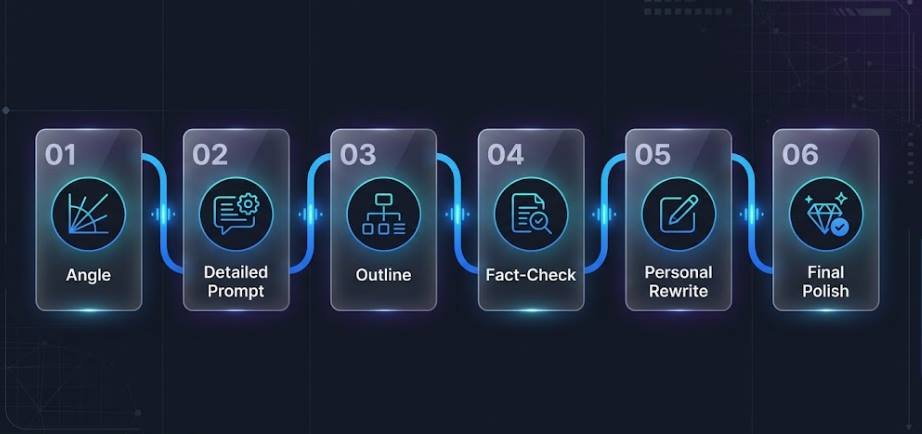
A repeatable process keeps quality high and risk low. Follow these steps for any blog post, product page, or client deliverable.
- Plan the angle yourself. Decide the audience, goal, and unique point of view before you open any tool.
- Write a detailed prompt. Include the audience, tone, length, key points, and what to avoid. Specific prompts produce far better drafts than vague ones.
- Generate an outline first. Review and reshape the structure before asking for full sections.
- Fact-check everything. Use the checklist above and replace weak claims with real sources.
- Rewrite in your own voice. Add personal examples, opinions, and experience. Remove stock phrases and filler.
- Run final checks and disclose when needed. Check originality, readability, and platform rules, and note AI use where required.
If you are just getting started, our list of AI tools for beginners is a good place to try these steps with free options.
A simple rule of thumb: Let AI do the first pass, but make sure the final version is mostly your thinking, your editing, and your experience. The more of yourself you add, the more original, trustworthy, and useful the content becomes.
Pros and Cons of Popular AI Writing Tools
No single tool is best for every writer. This quick comparison covers general strengths and weaknesses. Features and plans change often, so always check each provider’s current pricing and terms. For a deeper look at one of them, read our ChatGPT review.
| Feature | ChatGPT | Claude | Gemini | Jasper |
|---|---|---|---|---|
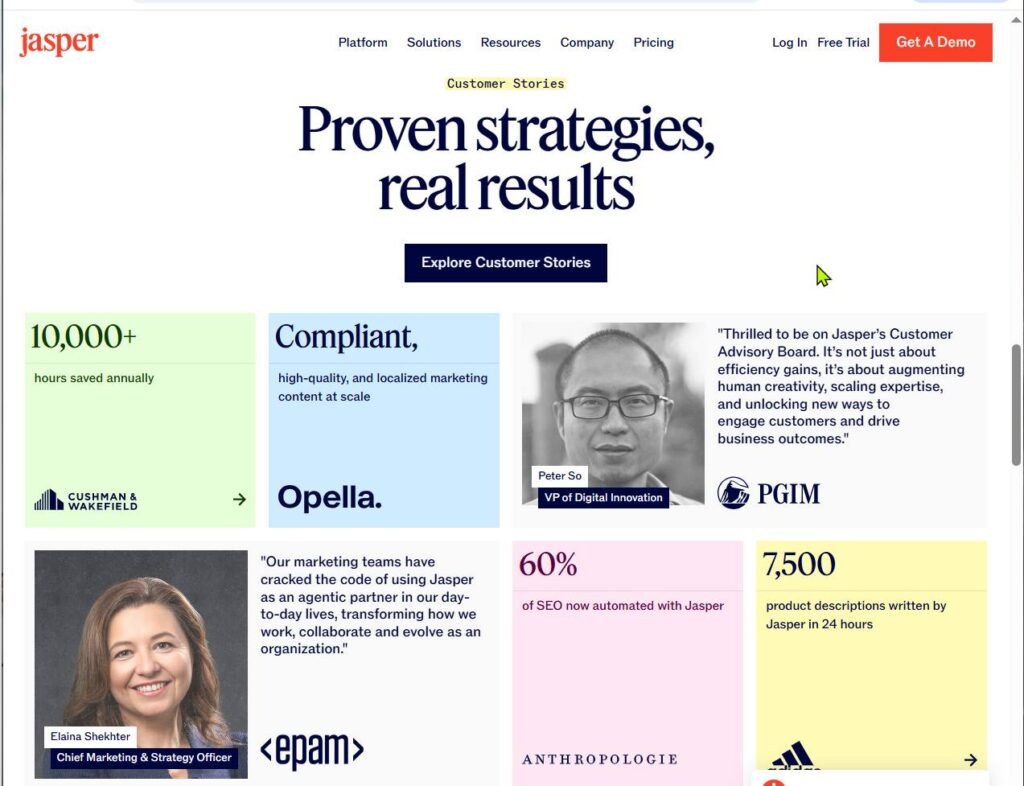
| Strength | Versatile, strong at brainstorming and conversation | Natural long-form writing and careful editing | Works with Google apps and search features | Built for marketing copy and brand voice |
| Weakness | Can state errors confidently and repeat stock phrases | Still needs fact-checking and a human voice | Output quality varies by task | Narrower focus and usually paid |
| Best for | General content, ideas, drafts | Articles, rewrites, nuanced tone | Research and productivity inside Google tools | Marketing teams creating ads and campaigns |
| Pricing | Free and paid plans | Free and paid plans | Free and paid plans | Paid plans |
Whichever you choose, the same rules apply: guide it with clear prompts, verify the facts, and edit for voice. Our guide on how to choose the right AI tools walks through a simple way to compare options for your needs.
Frequently Asked Questions
What are the pros and cons of using AI for writing?
The pros are speed, lower cost, help with brainstorming, and cleaner grammar. The cons are possible factual errors, generic or repetitive text, weaker emotional depth, plagiarism concerns, and the risk of relying on AI too much.
What are the disadvantages of using AI tools?
Common disadvantages include inaccurate information, bias, privacy risks when you share sensitive data, lack of originality, and over-reliance that can weaken your own skills. Our guide on how AI tools work explains why these limits exist.
Is using AI to help write a book cheating?
It depends on the context. Many authors use AI for brainstorming or editing and consider it a tool, while some contests, publishers, and schools restrict or ban it. Read the rules of the platform or organization involved, and be transparent about how you used AI.
Can I publish AI-written content on Amazon or other platforms?
Often yes, but each platform sets its own rules, and many require you to disclose AI-generated content. Policies change, so read the current guidelines of the platform before publishing.
What is the best AI tool to use for writing?
There is no single best tool. ChatGPT and Claude are popular for general writing, Jasper targets marketing teams, and Grammarly focuses on editing. Match the tool to your task, and compare options using our framework for choosing AI tools.
How does AI affect education negatively?
Risks include academic integrity problems, weaker critical thinking when students accept answers without checking them, privacy concerns, and unfair results from biased detection tools. A balanced review of AI in education covers both sides.
How can I use AI for writing effectively?
Plan your angle first, write detailed prompts, ask for an outline before the draft, fact-check every claim, rewrite in your own voice, and follow disclosure rules. For more ideas, see our tips on how to get the most out of AI tools.
Final Thoughts
AI writing tools are powerful, but they are only as good as the person guiding them. They save time on drafts, outlines, and polish, while you provide the accuracy, experience, and voice that make content worth reading. Use them with a clear workflow, verify what they produce, and follow the rules of the places you publish. Ready to build your toolkit? Start with our guide to AI tools for beginners and try the workflow on your next post.